One Weekend, One Book: Inside the Reading Lock-Ins Selling Out Across the US
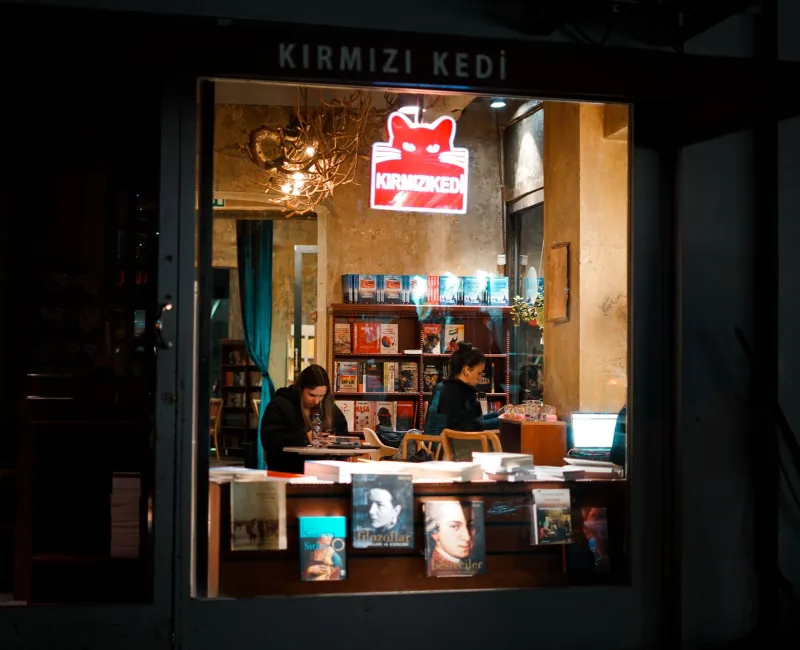
It's 9:40 on a Saturday night at a bookstore in St. Paul, Minnesota, and nobody is browsing. Thirty-odd people are folded into armchairs and floor cushions, shoes off, phones face-down, all working through chapter nineteen of the same novel. A staffer crosses the room holding a laminated card that reads SPRINT ENDS IN 12 MINUTES. Nobody looks up.
Welcome to the weekend lock-in, the reading event that has quietly become the most oversubscribed thing on an indie bookstore's calendar in 2026. The premise is almost aggressively simple: pick one book, block out 48 hours, and finish it before Monday. No abandoning. No starting a second one. No scrolling.
The Rules Are the Whole Point
Most lock-ins run on a loose version of the same structure. Friday evening is for arrival and first pages — a short warm-up sprint to get everyone past the point where a book still feels like homework. Saturday is the meat: three or four timed blocks of 45 minutes with 15-minute breaks, plus one long unbroken stretch, usually mid-morning, when people hit their stride. Sunday is for the closing push and, inevitably, a group discussion that runs long because half the room is emotionally wrecked.
Denver's version adds a shared spreadsheet where participants log pages read. A shop in Asheville, North Carolina, hands out paper bookmarks with a checklist of sprint times and a small prize for anyone who finishes before Sunday dinner. In Brooklyn, the whole thing happens partly online — a Discord channel that stays open all weekend with a channel bot pinging every 45 minutes so people reading alone at home can pretend they're in the room.
Marisol, who runs events at a Twin Cities shop, says the format took off because it solved a problem book clubs never could. 'Book clubs ask you to read at home, alone, on your own schedule, and then show up and perform having read it,' she says. 'This asks you to do the one thing everyone says they can never do — sit down and actually read — surrounded by people doing the same thing. The accountability is ambient.'
Why a Deadline Changes the Texture of a Book
Readers who swear by the 48-hour format describe something that sounds less like a productivity hack and more like a shift in attention. When you can't put a book down for three days, you stop treating it as a series of interrupted sessions and start holding the whole arc in your head at once. Foreshadowing lands. Subplots stay warm. The middle section, that notorious dead zone where most abandoned books go to die, gets read in one long afternoon instead of six grudging bedtimes.
There's a practical side, too. A weekend is a container most adults can actually control in a way they can't control a Tuesday. The tradeoff is that the container is expensive: it eats a social life, a chore list, and probably a workout. Participants describe prepping for a lock-in the way runners describe carb-loading — clearing the calendar, batch-cooking, warning roommates.
The Case Against the Stopwatch
The pushback is obvious and not unreasonable. Reading with a page counter running in the background starts to look like every other thing we've optimized — steps, sleep scores, screen time. Posting a Sunday-night finish-line selfie is a metric. Skipping a lock-in because you have a wedding is a failure. And a format that rewards finishing can quietly punish the reader who wants to sit with one gorgeous paragraph for twenty minutes.
Several booksellers I spoke with acknowledged the tension and said they've adjusted accordingly. Some now run a no-logging lane for people who want the room without the tracker. Others have dropped the prize for finishing and replaced it with a prize for showing up on Sunday, which is a much easier bar and, frankly, a better party.
There's also a genre problem. The 48-hour format rewards plot. A 300-page thriller, a fast literary novel, a memoir with momentum — these are lock-in books. A 700-page history of the Baltic states is not, and no amount of group chat enthusiasm will change that.
How to Pull One Off Without Ruining Your Weekend
If you're organizing one, either at a shop or in a group chat:
- Pick a book in the 250 to 330 page range. That's roughly 90 to 110 pages a day at a humane pace, with room for a slow Saturday morning.
- Sprint 45, break 15. Long enough to get absorbed, short enough that nobody's eyeballs mutiny. Longer blocks on Saturday, shorter on Friday.
- Allow hybrids. Audiobook hours count for some people, large print counts, and nobody should be policing how a stranger's eyes work.
- Kill the leaderboard. Share progress if you want, but rank nobody. The moment it becomes a race, the slow readers stop coming back.
- Have a Sunday plan. Finishing together is nice. Talking about it for 40 minutes afterward is the part people remember.
The Verdict, Sort Of
After a weekend in the room, the honest read is that the lock-in is neither the purest form of deep reading nor a cynical productivity trend. It's a scaffold. Some people will use it to finally finish the book that's been on their nightstand since spring. Others will use it to post about finishing. Both groups buy the book, both groups show up, and both groups — and this is the part that matters to a bookstore — leave having spent three days in a room where reading was the most interesting thing happening.
Which, in 2026, is a fairly rare commodity. KolBook's own community threads have started filling up with lock-in planning in a way that looks a lot like how running clubs looked five years ago: earnest, slightly culty, and genuinely fun if you let it be. Pick a weekend. Pick a book. Tell everyone. That's the whole trick.